AI-driven digital marketing is everywhere right now. Tools promise faster campaigns, smarter targeting, cheaper content, and higher ROI with fewer people involved. On paper, it sounds perfect. In practice, it’s a mixed bag.
Some brands are scaling faster than ever with AI. Others are quietly burning trust, killing engagement, and wondering why performance dropped even though “the system is optimized.”
The truth sits in the middle.
AI is incredibly powerful at certain parts of marketing. It is also dangerously bad at others. The difference between growth and damage comes down to where you automate, how much control you keep, and whether humans stay in the loop.
This guide breaks down exactly where AI helps, where it hurts, and how to use it without sabotaging your brand, especially as we move deeper into 2026.
What Is AI-Driven Digital Marketing?
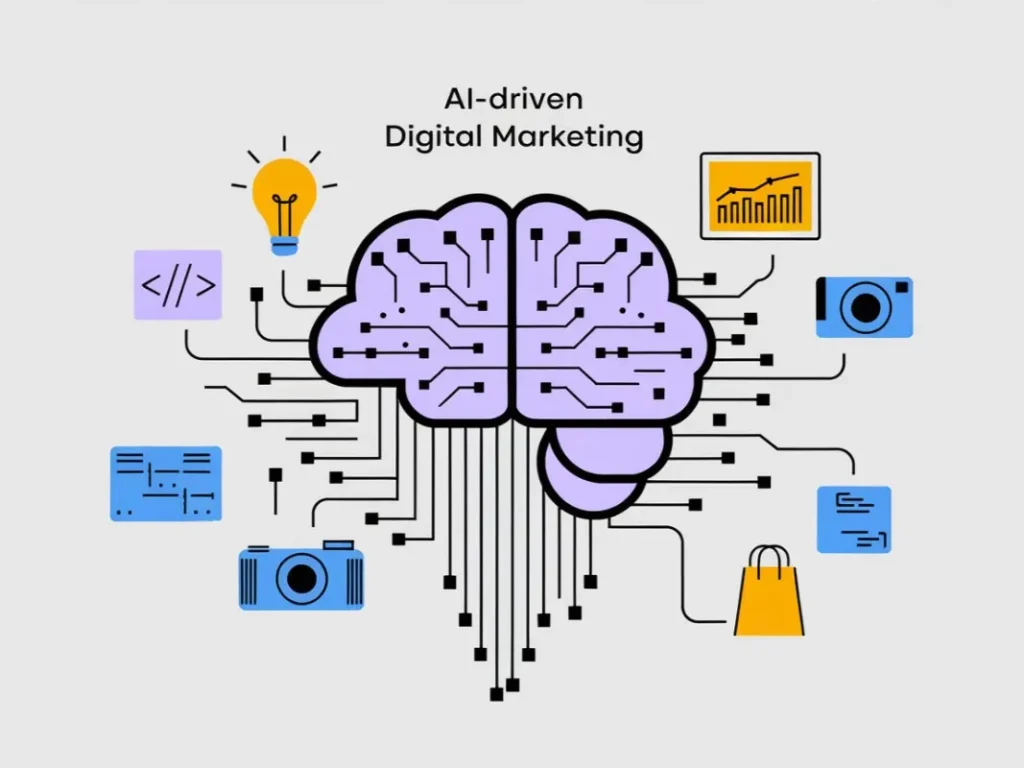
AI-driven digital marketing uses artificial intelligence, machine learning, and large datasets to automate, optimize, and personalize marketing activities.
Instead of manually adjusting campaigns or analyzing reports, AI systems can:
- Predict user behavior
- Adjust bids and budgets in real time
- Personalize content at scale
- Optimize ads, emails, and landing pages automatically
- Analyze performance patterns humans would miss
At its best, AI acts like a high-speed assistant. At its worst, it becomes an unmonitored decision-maker that optimizes metrics while ignoring meaning, context, and trust.
Where AI Automation Actually Helps (And Helps a Lot)
Let’s start with the good news. There are areas where AI consistently outperforms humans and should absolutely be used.
1. Predictive Analytics and Pattern Recognition
AI excels at analyzing massive datasets. It can spot trends across thousands of interactions that humans would never notice.
Where this helps:
- Predicting which users are more likely to convert
- Forecasting campaign performance
- Identifying drop-off points in funnels
- Segmenting audiences based on behavior, not assumptions
This is one of AI’s strongest use cases. When used correctly, it gives marketers better inputs for smarter decisions.
2. Paid Ads Bidding and Budget Allocation
Manual bidding is slow and reactive. AI bidding systems adjust in real time based on signals like device, location, behavior, time of day, and intent.
AI helps by:
- Allocating budget dynamically
- Scaling winning ad sets faster
- Reducing wasted spend on low-quality traffic
- Reacting instantly to performance changes
This is especially effective for Google Ads, Performance Max, and paid social campaigns, where speed matters.
Key rule: AI should control bids, but humans must control goals and guardrails.
3. Campaign Optimization and Testing
AI is excellent at running tests continuously.
It can:
- A/B test headlines, visuals, and CTAs
- Rotate creatives automatically
- Identify winning combinations faster
- Optimize delivery without manual resets
This reduces guesswork and speeds up iteration, especially in high-volume campaigns.
4. Personalization at Scale
AI can personalize experiences in ways that were impossible before.
Examples:
- Dynamic website content based on user behavior
- Personalized email subject lines and send times
- Product recommendations in ecommerce
- Region-specific or intent-based messaging
When done right, personalization improves relevance and engagement. When done poorly, it feels creepy or generic.
5. Chatbots and Customer Support Automation
AI chatbots are effective for:
- Answering FAQs
- Booking appointments
- Routing leads to the right team
- Providing instant responses outside business hours
This improves response time and reduces workload. It works best when bots handle simple, repetitive tasks and escalate complex issues to humans.
Where AI Automation Starts Hurting Performance
This is where most brands get burned.
1. AI-Generated Content Without Human Oversight
AI can generate content quickly. That does not mean it should publish content unsupervised.
Problems with AI-only content:
- Repetitive phrasing
- Shallow insights
- Lack of lived experience
- Generic tone that kills brand voice
- Low trust from readers and AI search systems
Search engines and AI answer engines are increasingly filtering out content that feels synthetic or interchangeable.
AI can assist content creation. Humans must own the final voice, structure, and insight.
2. Over-Automated Email and Social Messaging
Automated messaging sounds efficient until users realize they’re talking to a script.
Common mistakes:
- Trigger-based emails with no context
- Automated DMs that feel spammy
- Social replies that ignore the actual question
- Over-personalization that feels invasive
Automation should support relationships, not replace them.
3. Blind Trust in “Smart” Algorithms
AI optimizes for the metric you give it. Not the outcome you actually want.
Examples:
- Optimizing for clicks instead of conversions
- Optimizing for leads instead of qualified leads
- Optimizing for engagement instead of trust
Without human review, AI can drive impressive numbers that quietly harm long-term performance.
4. Brand Voice Erosion
AI does not understand nuance, humor, tone shifts, or cultural context the way humans do.
If left unchecked:
- Brands start sounding the same
- Messaging loses emotional depth
- Differentiation disappears
In crowded markets, brand voice is not optional. It is a competitive advantage.
5. Customer Trust and Transparency Issues
Users are becoming more aware of automation. When they feel manipulated or misled, trust drops fast.
Risk areas:
- AI-written testimonials
- Fake urgency created by algorithms
- Over-optimized persuasion tactics
- Lack of transparency about AI use
Trust is harder to rebuild than performance metrics.
The Real Role of Humans in AI-Driven Marketing
AI should not replace marketers. It should remove friction so marketers can focus on strategy, creativity, and judgment.
Humans should always own:
- Strategy and positioning
- Brand voice and messaging
- Ethical boundaries
- Final approval of content and campaigns
- Interpretation of performance data
AI is the engine. Humans are the drivers.
AI-Driven Digital Marketing in SEO and AI Search
Search is no longer just Google links. It includes AI Overviews, ChatGPT, Gemini, and other answer engines.
What this changes:
- AI values clarity over keyword stuffing
- Authority beats volume
- Original insight beats reworded summaries
- Structured content beats long, messy paragraphs
AI-assisted SEO works best when:
- Content answers questions directly
- Pages are structured cleanly
- Entities and expertise are clear
- Updates are frequent and meaningful
This is where human insight + AI efficiency becomes a serious advantage.
Paid Ads: Automation With Guardrails
AI-powered ads are incredibly effective when controlled properly.
Best practices:
- Set clear conversion goals
- Lock down brand messaging
- Review search terms and placements regularly
- Use AI for optimization, not strategy
- Pause automation when performance shifts unexpectedly
Automation without oversight is gambling. Automation with strategy is leverage.
Social Media: Where AI Helps Least
Social platforms are human spaces.
AI can help with:
- Scheduling
- Caption drafts
- Performance analysis
AI should not:
- Replace real conversations
- Respond emotionally to users
- Handle sensitive comments
- Define community tone
Social media success still depends on authenticity, timing, and human judgment.
The Smart AI Marketing Stack for 2026
High-performing brands use AI in layers:
- Data layer: AI analyzes performance and behavior
- Execution layer: AI assists with bids, testing, and delivery
- Creative layer: Humans shape messaging and storytelling
- Decision layer: Humans approve, refine, and adjust
This balance is where sustainable growth happens.
Common AI Marketing Mistakes to Avoid
- Automating before understanding the funnel
- Publishing AI content without editing
- Optimizing for vanity metrics
- Ignoring brand consistency
- Treating AI like a shortcut instead of a tool
AI amplifies whatever system you already have. If the system is weak, the damage scales faster.
Final Thoughts: Automation Is a Tool, Not a Strategy
AI-driven digital marketing is not about replacing people. It is about freeing people to do better work.
Automation helps when:
- It removes repetitive tasks
- It speeds up testing
- It improves decision-making
Automation hurts when:
- It replaces thinking
- It removes empathy
- It prioritizes metrics over meaning
The brands winning in 2026 are not the ones using the most AI. They are the ones using it intentionally.
Ready to Use AI Without Hurting Your Brand?
At The Node Blox, we help businesses use AI the right way. Not as hype. Not as a shortcut. As a competitive advantage.
From AI-assisted SEO and paid ads to conversion-focused web development and social media marketing, we build systems that scale without losing trust or identity, serving businesses across Sterling, VA and the entire DMV region. See us on LinkedIn & Instagram.
Want to know where AI will help your marketing and where it’s quietly hurting it?
Reach out to The Node Blox and get a clear, honest breakdown before automation costs you more than it saves.